If your walkway, patio or front steps turn green, black or slick every winter, that film is usually algae, moss or mildew, and it is a real slip hazard. The safe fix is to clean it off thoroughly before and during the rainy season, choose a cleaning method that suits the surface, and reduce the shade and standing water that let it come back.
Why a green walkway is a safety problem
According to the CDC, falls are the leading cause of injury for adults 65 and older, and about 1 in 4 older adults, more than 14 million people, report falling every year[1]. National Safety Council figures based on federal data show that more than 3.85 million older adults were treated in emergency departments for fall injuries in 2023, and 43,020 died from preventable falls in 2024[2].
A slick outdoor surface is one fall risk you can fix with a cleaning. Oregon State University's pest management guidance states plainly that moss on sidewalks and algae on walkways are slipping hazards[3]. The Royal Horticultural Society likewise notes that these growths can make hard surfaces slippery and should be controlled where people walk[4]. The paths that matter most are the ones used daily: the front walk, patio steps, side-yard paths and pool decks.
What is actually growing on your patio?
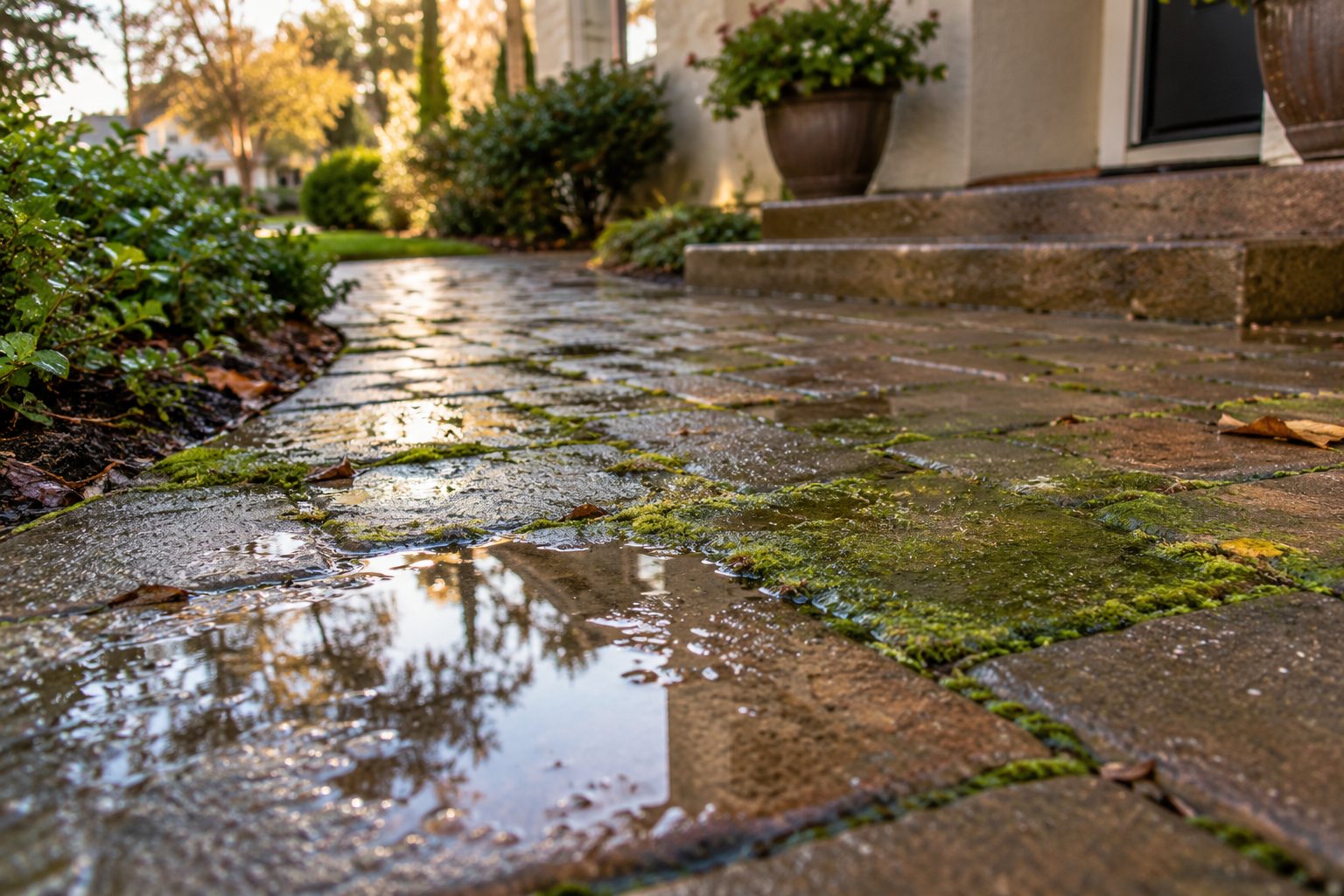
- Algae: a green or black slimy film, worst in damp, shady spots. It is often the slipperiest of the three when wet.
- Moss: soft green cushions in joints, cracks and along shaded edges of concrete and pavers.
- Mildew and dark staining: gray-black spotting on concrete, stone and steps that stay damp, especially under trees and eaves.
All three need the same thing: moisture. Algae grow fastest in wet, shady areas with poor air circulation, and many mosses prefer damp, shady conditions[4]. UC Cooperative Extension points to excess moisture as the main cause of algae, and notes that sprinkler zones covering both sun and shade often overwater the shaded part[5]. That is why the north side of a house, the ground under a big oak or the strip beside a lawn that gets sprayed every morning often turn green first.
Why winter is the risky season in the Sacramento area
Sacramento-area summers are hot and dry, so most patios look fine from June through September. The trouble starts with the rains. According to the National Weather Service, Sacramento averages about 20 inches of precipitation a year, and more than half of it falls during the November through February rainy season[6]. Short days, wet leaves and surfaces that never fully dry give algae and moss weeks to spread.
The practical takeaway: clean shaded walkways and patios in fall, before the heavy rain, and check them again mid-winter. Our guide to cleaning after wildfire smoke and pollen covers the spring and summer side of the calendar.
How to clean algae, moss and mildew safely
1. Clear and inspect first
Sweep off leaves and debris, which hold moisture against the surface. Look for loose pavers, cracked steps or lifted edges. Cleaning won't fix a trip hazard, so note those for repair.
2. Remove the growth physically
For light growth, a stiff brush and water go a long way. Oregon State's guidance recommends scraping, scrubbing with a stiff brush or sweeping, and notes that dead moss has to be removed the same way as living moss[3].
3. Use pressure where the surface can take it
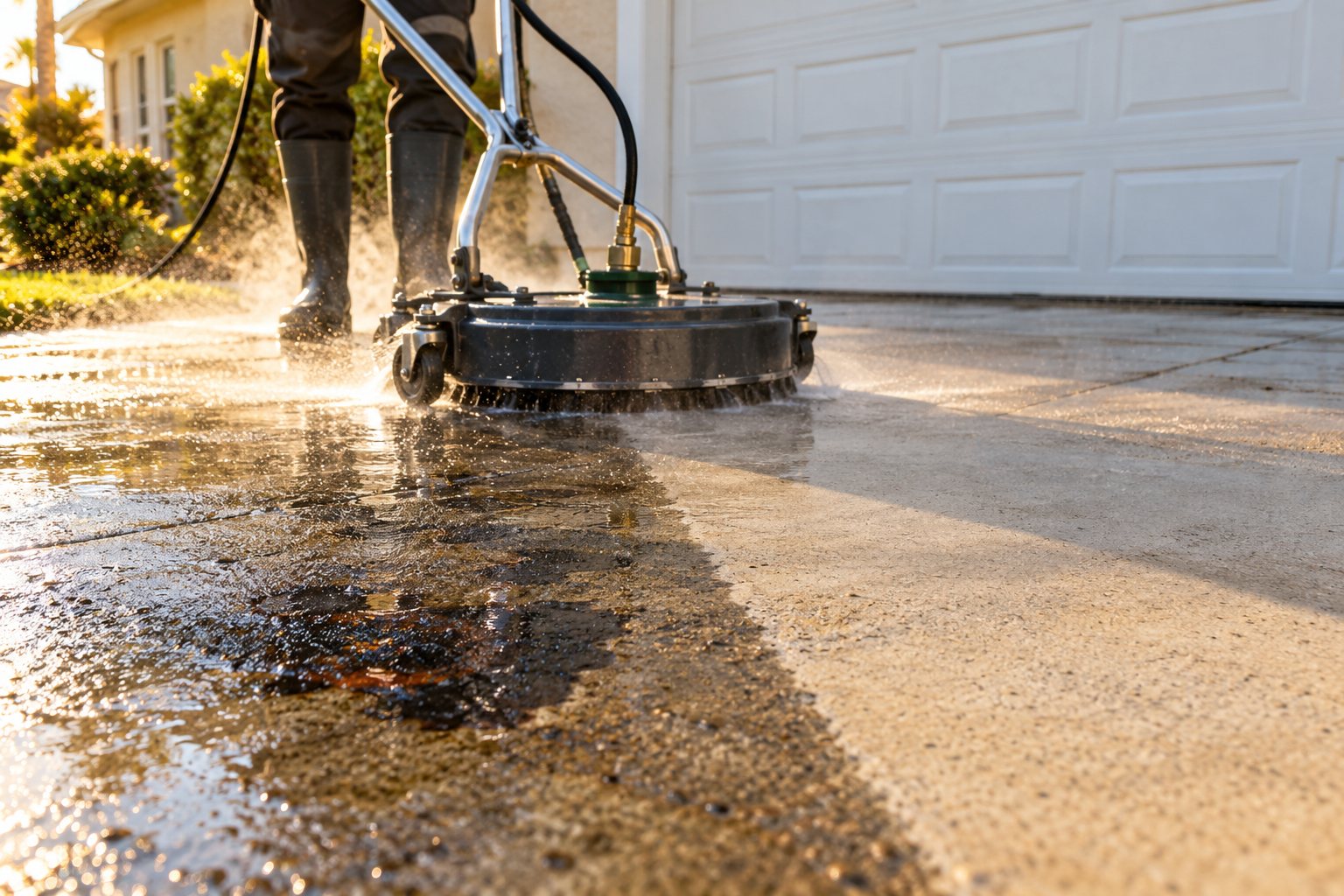
Pressure washing is effective on patios and sidewalks[3][4], and it is what we use on sound concrete. Softer or more delicate surfaces, like some natural stone, older or worn concrete, and sanded paver joints, need lower pressure and a wider spray pattern so the surface isn't etched and the joint sand isn't blasted out. Our article on soft washing vs. pressure washing explains how to choose.
4. Be careful with chemicals
Moss and algae products are short-acting. Oregon State notes that they wash off patios and sidewalks with rainfall and advises against applying them when rain is expected within 24 hours[3]. UC Cooperative Extension warns that copper-based products can also harm nearby plants, so label directions must be followed exactly[5]. Whatever goes on your patio can end up in planting beds or the street gutter. That is why LORS Cleaning uses eco-safe, biodegradable products. See eco-friendly exterior cleaning and storm drains for more.
5. Rinse well and let it dry
Rinse away loosened growth and any cleaning product. A freshly washed surface is wet and slippery for a while, so keep people and pets off it until it dries.
Keep it from coming back
- Adjust sprinklers so they don't spray walkways or overwater shaded zones[5].
- Trim overhanging shrubs and branches to let in light and air[4][5].
- Fix low spots where water pools, and keep drains and gutters along paths clear of debris[4].
- Sweep leaves off steps and patios regularly through fall and winter.
- Schedule a cleaning each fall for shaded, high-traffic paths.
Moss and algae return wherever the shade and moisture stay. Oregon State notes that cutting back the conditions that feed algae is the only way to minimize regrowth[3].
DIY or professional?
A small patch on a flat patio is a reasonable DIY job. Consider calling a pro if growth covers long walkways or steps, if the surface is pavers or natural stone you don't want to damage. LORS Cleaning cleans walkways, patios and steps throughout the Sacramento region, often together with driveway pressure washing. We are licensed and insured, and we back every job with our satisfaction guarantee: tell us within 24 hours if something isn't right and we'll come back and fix it free. Ask for a free, exact estimate, with no hidden fees. If you're in the south county, see our Elk Grove service page or the Sacramento page.
Quick answers
When is the best time to clean algae off a walkway in Sacramento?
Early fall, before the November through February rainy season, is ideal. Shaded paths may need another check in mid-winter.
Will pressure washing damage my patio?
Sound concrete handles pressure washing well. Pavers, natural stone and worn concrete need lower pressure and more care to avoid etching surfaces or blowing out joint sand.
Why does the moss keep coming back?
Moss and algae return wherever shade and moisture remain. Fixing sprinkler overspray, trimming plants and improving drainage helps a cleaning last longer.
Sources
- Centers for Disease Control and Prevention. Older Adult Falls Data. https://www.cdc.gov/falls/data-research/index.html
- National Safety Council. Injury Facts: Older Adult Falls. https://injuryfacts.nsc.org/home-and-community/safety-topics/older-adult-falls/
- Oregon State University, Solve Pest Problems. How to Manage Moss on Roofs & Walkways (2026). https://solvepestproblems.oregonstate.edu/moss
- Royal Horticultural Society. Algae, lichens, liverworts and mosses on hard surfaces. https://www.rhs.org.uk/biodiversity/algae-lichens-liverworts-moss-hard-surfaces
- University of California Cooperative Extension, Ventura County. Algae (Landscape gardening guidance). https://ucanr.edu/sites/ucceventura/Gardening/Coastal/Landscape_578/Algae
- National Weather Service, Sacramento. Climate of Sacramento, California (revised 2010). https://www.weather.gov/media/sto/pdf/CLISAC2010.pdf