After a smoke event or a heavy pollen season, wait until air quality improves, then clean outdoor surfaces gently: mist ash with a little water instead of blowing or dry-sweeping it, wear an N95 or P100 respirator, keep ash out of storm drains, and clean windows, solar panels and walkways in that calmer, damp way. If your home was in or next to a burn area, this is not routine cleaning; follow your county's debris and hazard instructions first.
Ash fallout vs. fire damage: know which one you have
This article is about the fine gray ash, soot film and pollen that settle on homes miles away from a fire, which is common across the Sacramento Valley during fire season. It is not about homes that burned or were damaged by fire. Ash from burned buildings can contain hazardous material, and debris removal on damaged properties is handled through county and state programs. LORS Cleaning does exterior surface cleaning, not fire restoration or hazardous debris removal.
Step 1: Wait for the air, then protect yourself
Do not start cleaning while smoke is still heavy. During smoke events, Sacramento County advises limiting outdoor activity, keeping doors and windows closed, and checking the Spare The Air website or the Sacramento Region Air Quality app for current conditions[1]. Once the air has cleared, the California Department of Public Health (CDPH) recommends a close-fitting N95 or P100 respirator for ash cleanup, noting that bandanas, surgical and cloth masks do not effectively block fine particles[2]. CDPH also recommends gloves, long sleeves, long pants and shoes, and washing any ash off your skin as soon as possible[2]. Keep children and pets away from ash while you work[3].
Step 2: Use damp methods, never a leaf blower
The single most repeated rule in official guidance is to keep ash out of the air. CDPH says to never use a leaf blower, because it spreads ash and blows it back into the air, and to avoid shop vacuums and other non-HEPA vacuums for the same reason[2]. The U.S. Environmental Protection Agency recommends misting outdoor hard surfaces with water before sweeping, then wet-mopping, using as little water as possible[4].
- Mist, do not blast. A light spray settles ash; a strong jet throws it into the air and onto you.
- Gently sweep dampened ash into a pile and collect it.
- Bag it. EPA advises storing collected ash in sealed bags or containers[4], and CDPH suggests checking with your county for disposal instructions[3].
Step 3: Keep ash out of storm drains
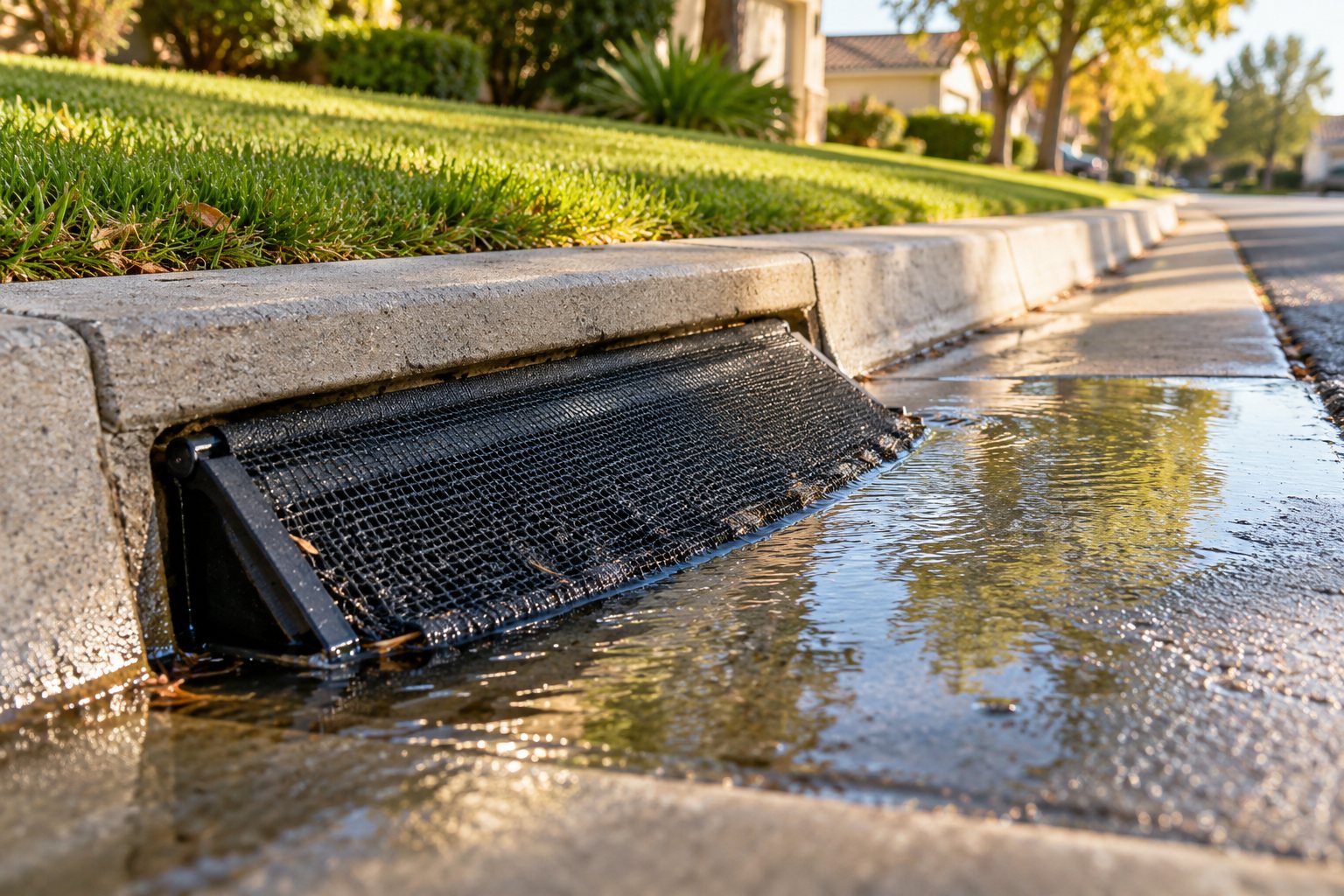
EPA specifically says to avoid washing ash into storm drains[4]. Storm drains in most of California flow to creeks and rivers without treatment. That is why the order matters: collect the loose ash dry-but-damp first, and only then wash surfaces. Our article on eco-friendly exterior cleaning and storm drains covers how to manage runoff.
Cleaning by surface
Windows, frames and sills
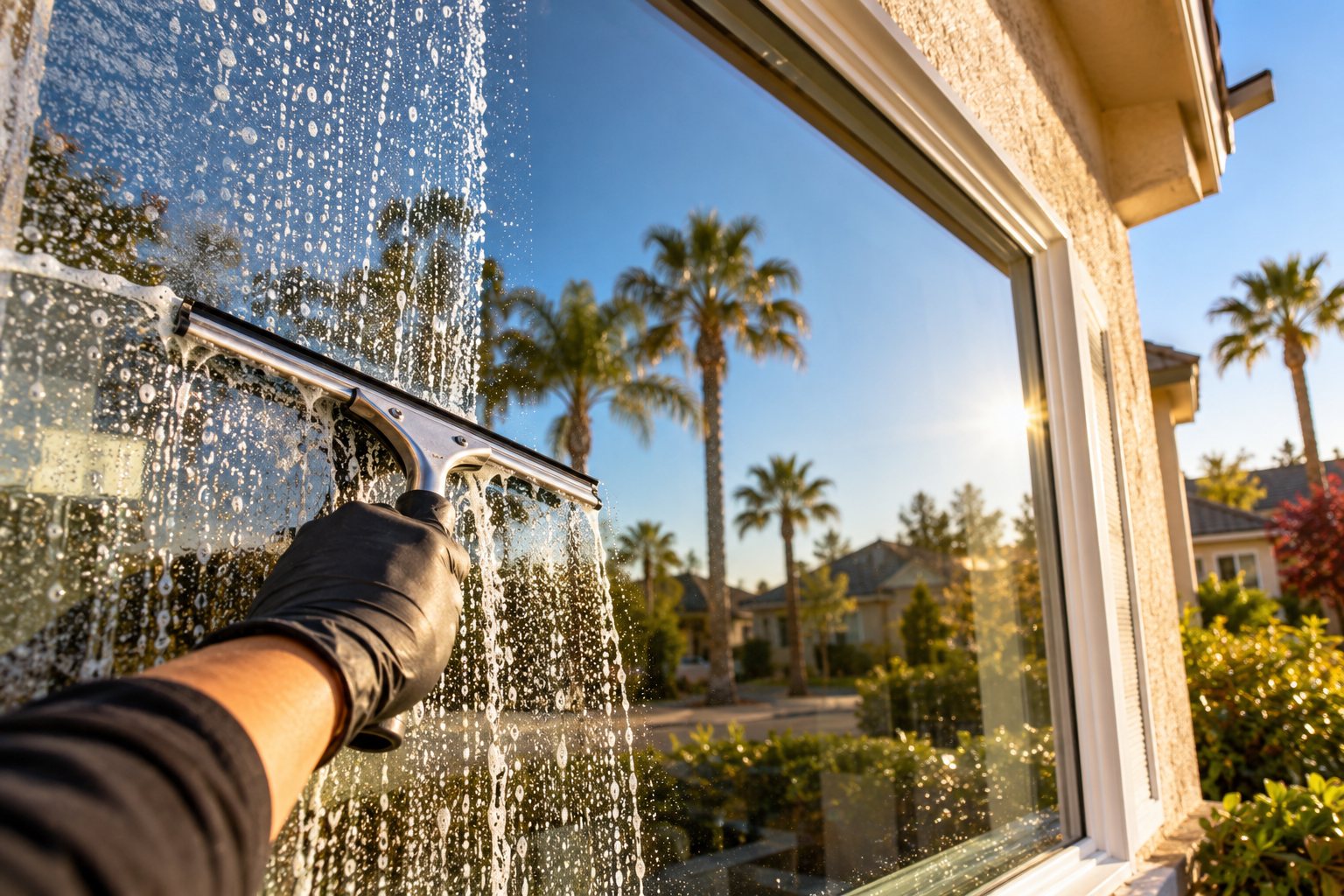
Ash and pollen are gritty. Wiping dry glass with a squeegee or cloth drags those particles across it and can leave fine scratches. Rinse or wet the glass first so the grit floats off, then clean. Sills and tracks collect the most ash; dampen and wipe them out before cleaning the glass. Screens trap a lot of pollen and should be cleaned separately. For more on technique, see our window cleaning guide for Sacramento.
Solar panels
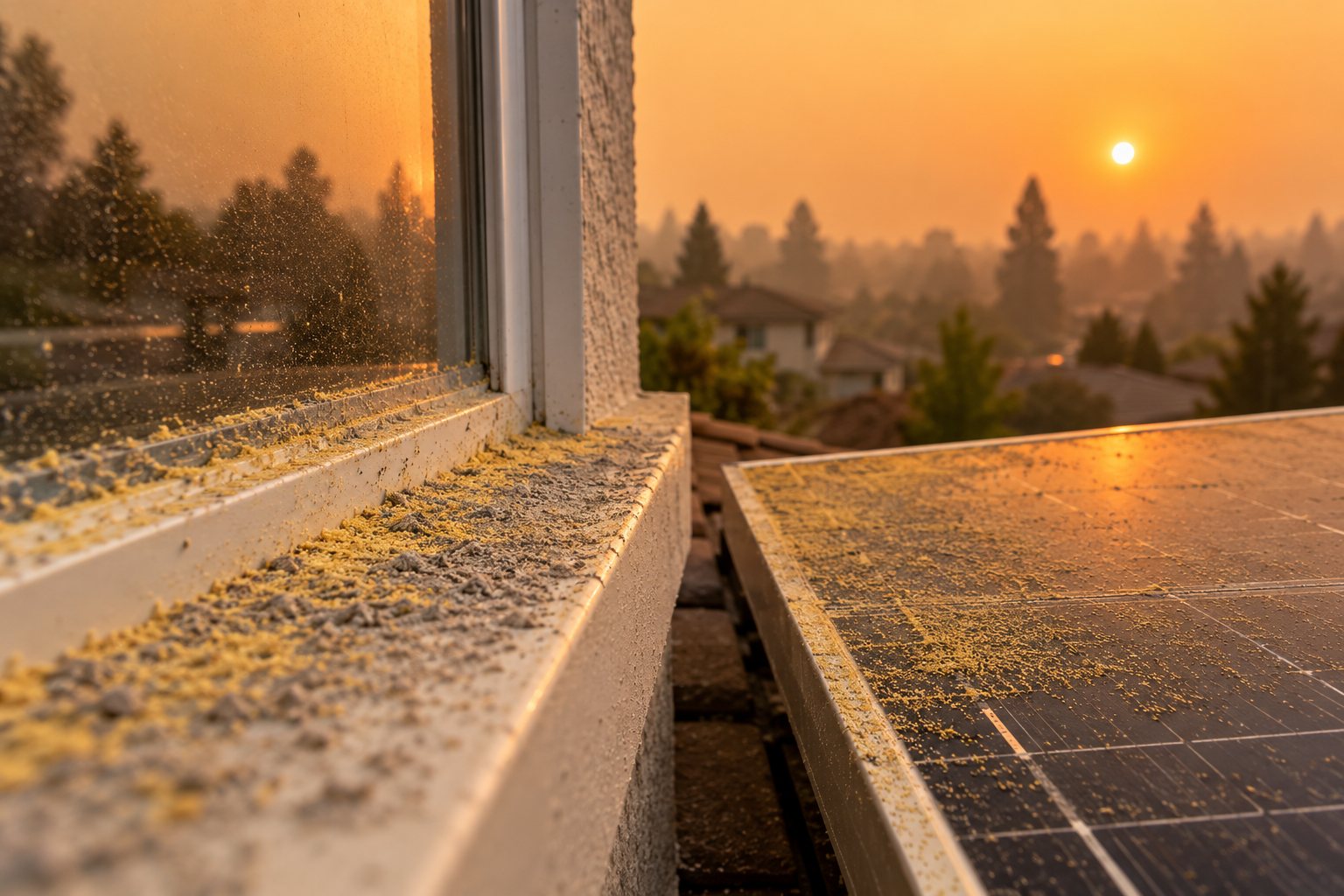
Smoke itself cuts solar output while it hangs in the air: researchers at South Dakota Mines found widespread wildfire smoke can reduce the output of individual panels by nearly 50%[5]. That loss ends when the smoke clears, but ash and pollen that settle on the glass stay until they are washed off. Clean panels following the manufacturer's guidance: no high-pressure spray, no harsh chemicals, and no scraping dry ash across the glass. Do not climb onto a roof to do it yourself. Read does solar panel cleaning help? and how often to clean solar panels in the Central Valley.
Walkways, patios and driveways
Dampen and collect loose ash first, as above. After that, concrete and pavers can be washed normally. Ash mixed with sprinkler water or early rain can leave gray streaks and a film that a broom will not remove; a proper wash takes care of it. See walkway and patio cleaning and driveway pressure washing.
Siding, stucco and trim
Ash settles on ledges, eaves and the tops of window trim, and pollen leaves a yellow-green film on stucco and painted surfaces. A low-pressure soft wash removes both without forcing water behind siding or damaging stucco. More in soft washing vs. pressure washing.
Pollen season: the same rules, less risk
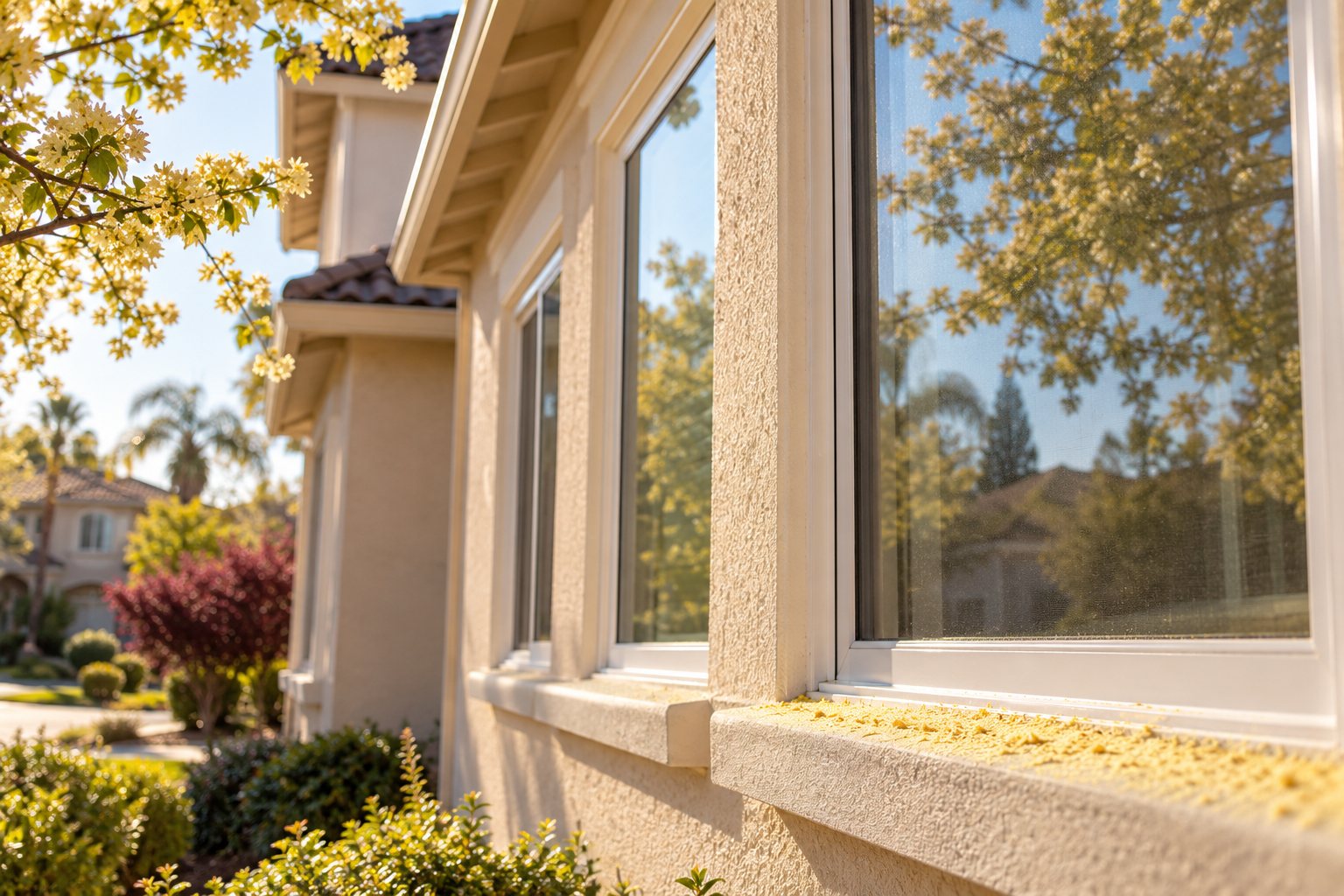
Spring pollen is not hazardous the way ash can be, but it behaves similarly: it is fine, it blows around easily, and it coats windows, panels, patio furniture and walkways. Rinsing rather than dry-wiping protects glass, and a single cleaning once the heaviest pollen has passed usually lasts longer than repeated cleanings during the peak.
When to call a professional
- Ash or pollen is on second-story windows or roof-mounted solar panels.
- You have respiratory or heart conditions, or would rather not handle ash yourself.
- The ash has turned into streaks or film after rain or sprinklers.
LORS Cleaning cleans windows, solar panels, walkways, driveways and whole-house exteriors across Sacramento and within 100 miles, using eco-safe biodegradable products. We are licensed and insured, give a free, exact estimate with no hidden fees, and if something isn't right, tell us within 24 hours and we come back and fix it free. We serve Sacramento, Auburn, Folsom and nearby cities.
Quick answers
Can I use a leaf blower to clear ash from my patio?
No. CDPH says never to use a leaf blower on ash because it blows fine particles back into the air. Mist the ash lightly with water, sweep it gently and bag it.
Can I hose ash off my driveway into the street?
EPA advises avoiding washing ash into storm drains. Collect loose ash first using damp methods, then wash the surface.
Does LORS Cleaning do fire damage restoration?
No. We clean exterior surfaces such as windows, solar panels, walkways, driveways and siding after ash and pollen settle. Fire-damaged properties should follow county debris and hazard instructions.
Sources
- Sacramento County. Wildfire Smoke Impacts the Sacramento Region. https://www.saccounty.net/news/latest-news/Pages/Wildfire-Smoke-Impacts-the-Sacramento-Region.aspx
- California Department of Public Health. Safe Cleanup of Ash. https://www.cdph.ca.gov/Programs/EPO/Pages/Wildfire%20Pages/Safe-Cleanup-of-Ash.aspx
- California Department of Public Health. Reduce Exposure to Ash When Returning Home After a Wildfire (2025). https://cdph.ca.gov/Programs/CCDPHP/DEODC/CDPH%20Document%20Library/Wildfire%20Ash%20Fact%20Sheet_V3_001.pdf
- U.S. Environmental Protection Agency. Avoid Ash Exposure (fact sheet, EPA-452/F-26-011). https://www.epa.gov/system/files/documents/2026-06/protect-yourself-from-ash-factsheet.pdf
- South Dakota School of Mines & Technology. New Studies Show Wildfire Smoke Could be a Stumbling Block for Solar Energy Generation (2023). https://www.sdsmt.edu/news/releases/smoke-and-solar.html